What is Hijama? A clear guide to cupping therapy
Understand dry and wet cupping, what a session may involve, and why informed consent and clinical screening matter.
This article provides general education. Seek a qualified health professional for personal diagnosis or treatment, and use local emergency services for urgent danger.
The basic idea
Cupping places a cup on the skin to create suction. Dry cupping uses suction only; wet cupping, often called Hijama, also uses small superficial skin incisions under controlled conditions.
People seek cupping for different reasons, including pain or wellbeing. Research is still limited and low quality, so it should not be advertised as a cure or used instead of diagnosis and treatment from a qualified clinician.
What responsible care looks like
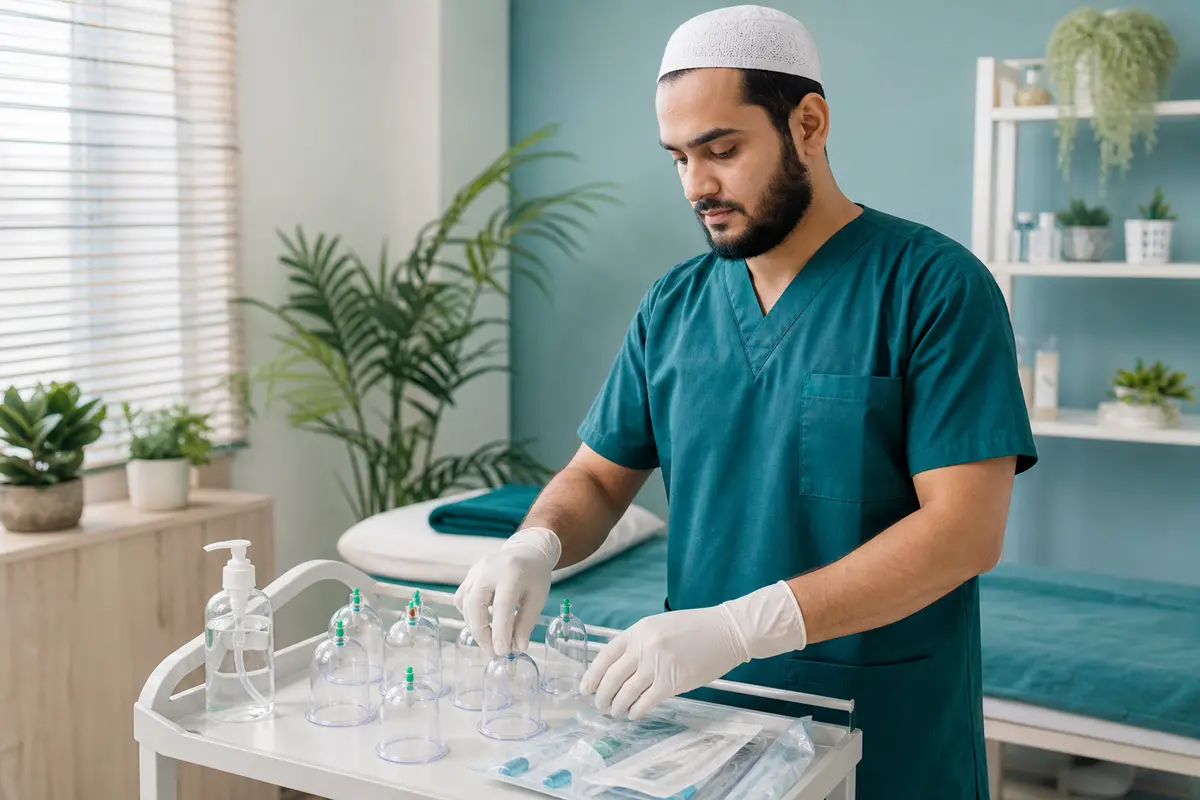
A responsible center checks health history, medicines, bleeding risk and skin condition before asking for clear consent. Single-use sterile items, hand hygiene, safe sharps disposal and written aftercare are essential.
Ask what will happen, who will provide the service, what it costs and when medical referral is needed. You can pause or withdraw consent at any time.