Designing a safe and respectful Ruqiya room
Practical guidance for privacy, visibility, accessibility, chaperones, consent and emergency readiness.
This article provides general education. Seek a qualified health professional for personal diagnosis or treatment, and use local emergency services for urgent danger.
Privacy without isolation
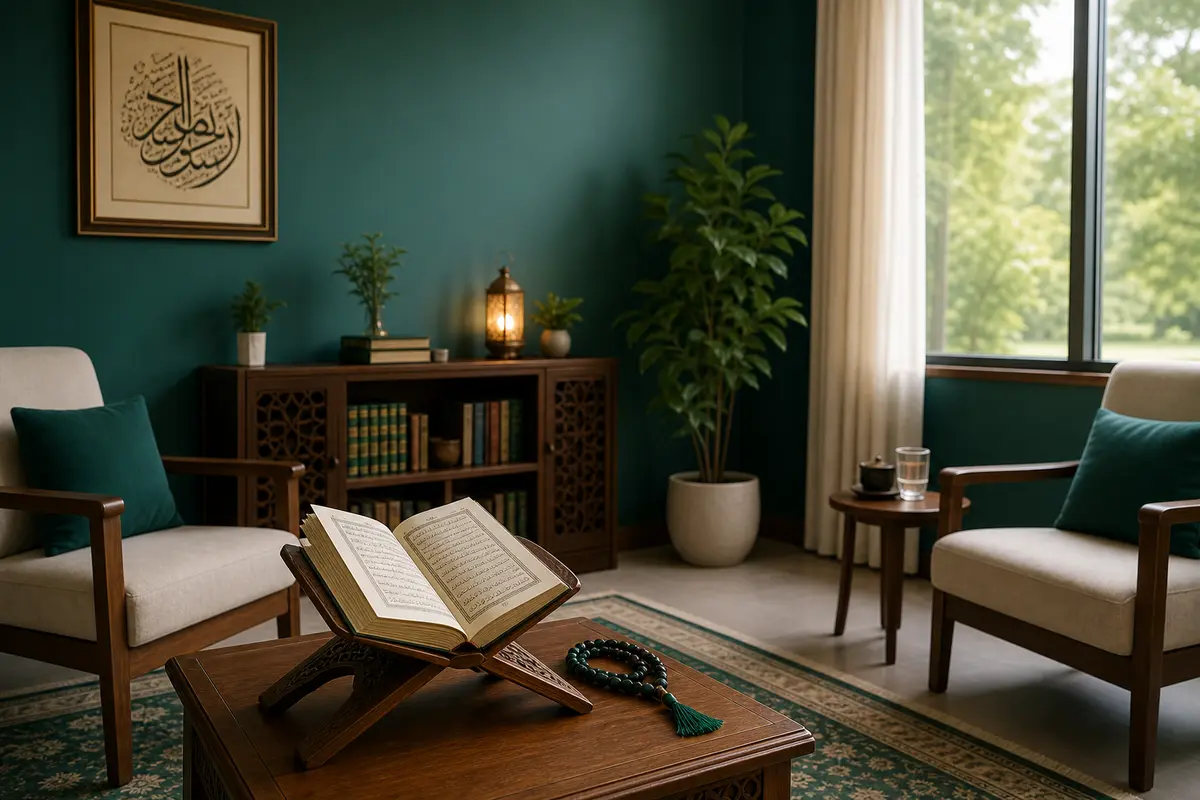
Use a quiet, clean and accessible room where conversations cannot be casually overheard. Explain who will be present and offer an appropriate chaperone or companion according to the client's preference and safeguarding needs.
The exit should remain accessible. Avoid locked or intimidating spaces, hidden recording and physical arrangements that prevent a client from stopping or leaving.
Prepare the team
Display service boundaries, fees, complaint routes and emergency contacts. Staff should understand consent, confidentiality, de-escalation, safeguarding and when to seek medical help.
Keep notes factual and access-controlled. A calm environment supports dignity, but good design must be backed by ethical behavior and reliable procedures.