Wet cupping, bleeding and anemia: who needs extra caution?
Why screening for bleeding history, anemia symptoms and repeated sessions is important before Hijama.
This article provides general education. Seek a qualified health professional for personal diagnosis or treatment, and use local emergency services for urgent danger.
Risk is personal
Wet cupping intentionally breaks the skin and removes a small amount of blood. Existing anemia, a bleeding disorder, poor healing, frequent sessions or certain medicines may change the risk.
Tiredness, breathlessness, paleness, dizziness or known low hemoglobin should be discussed with a qualified clinician. A center cannot diagnose anemia by looking at cup contents.
Screen, record and refer
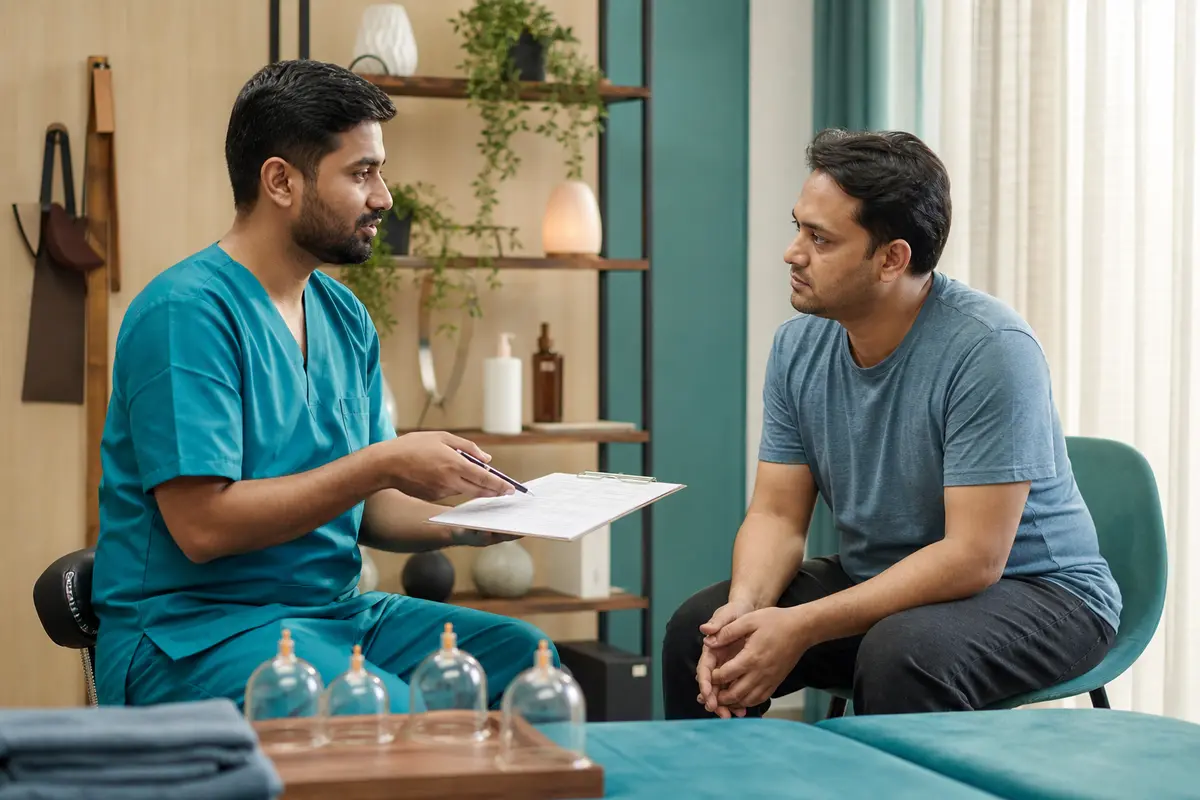
A practitioner should document relevant history, session frequency, sites and adverse effects. They should postpone and refer when the benefit-risk balance is unclear.
Do not take iron or stop medicine solely on a non-clinician's advice. Testing and treatment decisions belong with an appropriately qualified healthcare professional.