A 10-point Hijama safety checklist for clients
Use these questions to assess consent, screening, hygiene, sharps handling, aftercare and emergency readiness.
This article provides general education. Seek a qualified health professional for personal diagnosis or treatment, and use local emergency services for urgent danger.
Before the procedure
Confirm identity and training, health screening, written consent, a private treatment space and a clear explanation of benefits, limits and alternatives. Check that fees and the cancellation policy are visible.
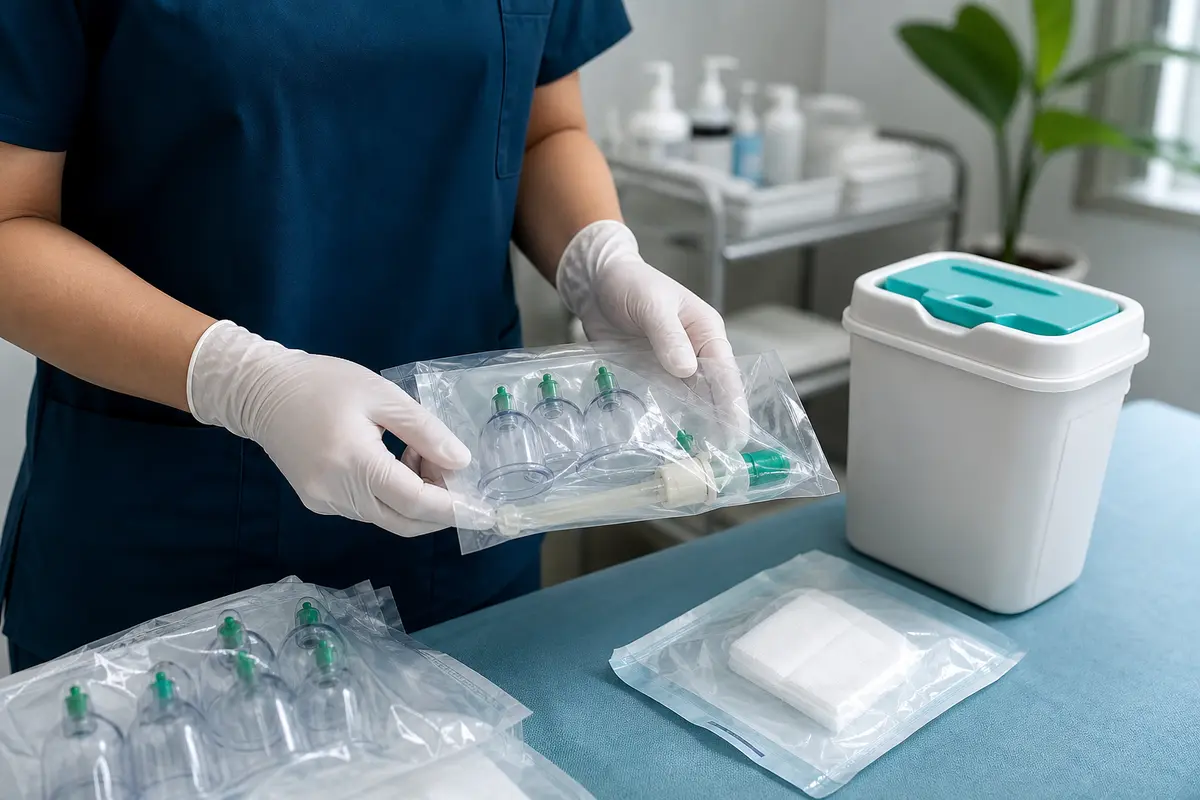
Ask to see sealed single-use blades and gloves. The treatment surface should be clean, hand hygiene available and reusable equipment processed between every client.
Before you leave
You should receive written aftercare, warning signs, a follow-up number and a record of what was done. Used sharps must go directly into a proper puncture-resistant container.
The center should know how to respond to bleeding, fainting, allergy or other urgent problems. If answers are vague or hygiene feels unsafe, it is reasonable to leave.