Infection prevention in wet cupping: what every client should see
A plain-language guide to hand hygiene, single-use items, reusable cups, surfaces and safe waste handling.
This article provides general education. Seek a qualified health professional for personal diagnosis or treatment, and use local emergency services for urgent danger.
Break the chain of infection
Wet cupping exposes blood. Poorly processed equipment contaminated with blood can transmit infections such as hepatitis B and C, so routine-looking shortcuts are not acceptable.
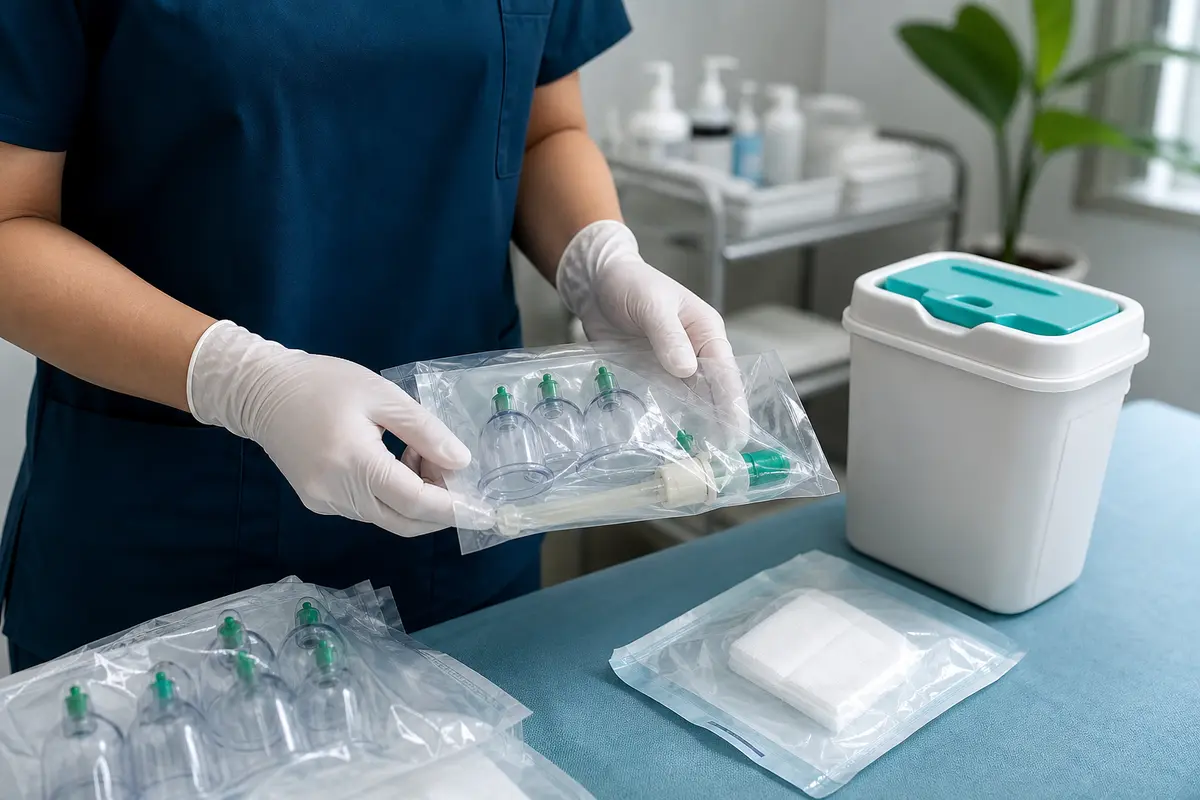
Hand hygiene must happen at the correct moments, gloves are changed between clients and sterile single-use skin-cutting items are never reused. Clean and used supplies should remain separated.
Reprocessing and waste
Reusable cups require documented cleaning and disinfection or sterilization appropriate to their use and material. Wiping a visibly used cup without a validated process is not enough.
Blood spills need approved handling, and blades go directly into a sharps container. Centers should train staff, maintain records and review any exposure incident promptly.